
#22 | Repetition, Resilience, and Why Ease Comes After the Hard Part
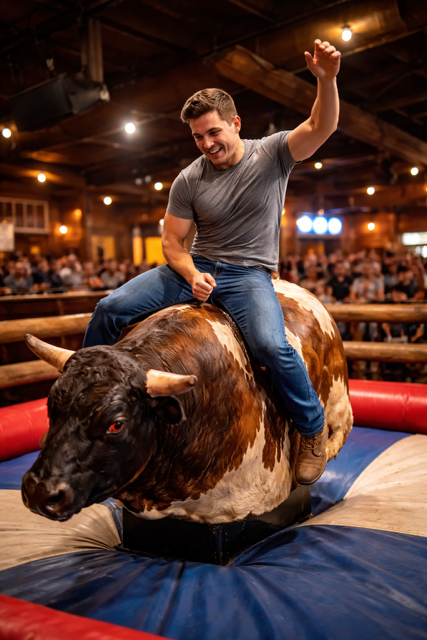
Life gets easier the more we repeat it.
That might sound obvious, but it’s something most of us forget when things feel heavy. Repetition builds familiarity. Familiarity builds confidence. And confidence lowers friction. What once felt overwhelming slowly becomes manageable—not because life changed, but because we did.
This is where happiness and joy quietly intersect with resilience. We often think happiness comes from comfort, stability, or a life without challenges. But in reality, joy is deeply tied to how resilient we are. The more resilient you become, the less effort it takes to move through life. Not because the obstacles disappear, but because they no longer shake you at your core.
We tend to imagine that a challenge-free life would be the ideal one. No stress. No resistance. No struggle. But our bodies—and minds—were not built for that. We are the product of thousands of years of survival through adaptation, pressure, and resilience. At a cellular level, we evolved by responding to stress and learning from it. When we remove all challenge, something feels off. Restless. Uneasy. Almost like the system isn’t being used the way it was designed.
Resilience is a muscle. If you don’t exercise it, it weakens.
Think about a bull rider.
The first time someone climbs onto a bull, they barely last a few seconds. Their body doesn’t know what’s coming. Their mind panics. Everything is reactive. But a professional rider—someone who’s done it hundreds or thousands of times—can stay on for minutes. Not because the bull got easier, but because they learned how to move with it.
Life works the same way.
The less you’ve experienced, the more difficult life feels. Every problem feels personal. Every setback feels final. But the more you experience—failure, discomfort, uncertainty—the more you begin to recognize patterns. You realize that difficulty isn’t unique to you. It’s part of the process. And that understanding alone makes things lighter.
Every sport works this way. You don’t get better by avoiding the game. You get better by playing it—again and again. And life, at its core, is no different. When you approach life as a sport, something shifts. You stop expecting ease at the beginning. You expect learning.
Over time, experiences start to carry over. What you learn in one challenge applies to another. Emotional strength, patience, discipline, recovery—these skills stack. Eventually, you build a mesh of understanding that goes beyond any single event. You start to see life with clarity instead of fear.
That’s when things feel easier.
Not because life became simple—but because you became resilient enough to meet it.